L-Theanine Benefits: Sleep, Anxiety, and Focus

Disclosure: This article may contain affiliate links. We may earn a small commission at no extra cost to you. This helps support our work in providing evidence-based wellness content.
What Are the Proven Benefits of L-Theanine?
L-theanine is the compound behind the calm, focused feeling of a good cup of tea — and it's become one of the most popular "relaxation without drowsiness" supplements on the shelf. But which l-theanine benefits are backed by research, and which are wishful thinking? The short version: the evidence is genuinely good for taking the edge off caffeine and easing acute stress, more modest for sleep, and its effects are best described as subtle rather than dramatic.
L-theanine is an amino acid found almost exclusively in tea leaves (and a few mushrooms). It's water-soluble, crosses into the brain, and is best known for promoting "calm alertness" — relaxed but not sedated. Here's what it actually does.
How Does L-Theanine Work?
L-theanine's signature effect is boosting alpha brain waves — the electrical pattern associated with a state of relaxed, wakeful focus, like the calm you feel during light meditation. It also nudges the calming neurotransmitter GABA along with serotonin and dopamine.
Crucially, it does this without making you sleepy. That's what separates theanine from a sedative and explains why people use it both to focus during the day and to unwind at night. It's the same "settle the nervous system" territory as breathwork and other tools that shift you out of fight-or-flight.
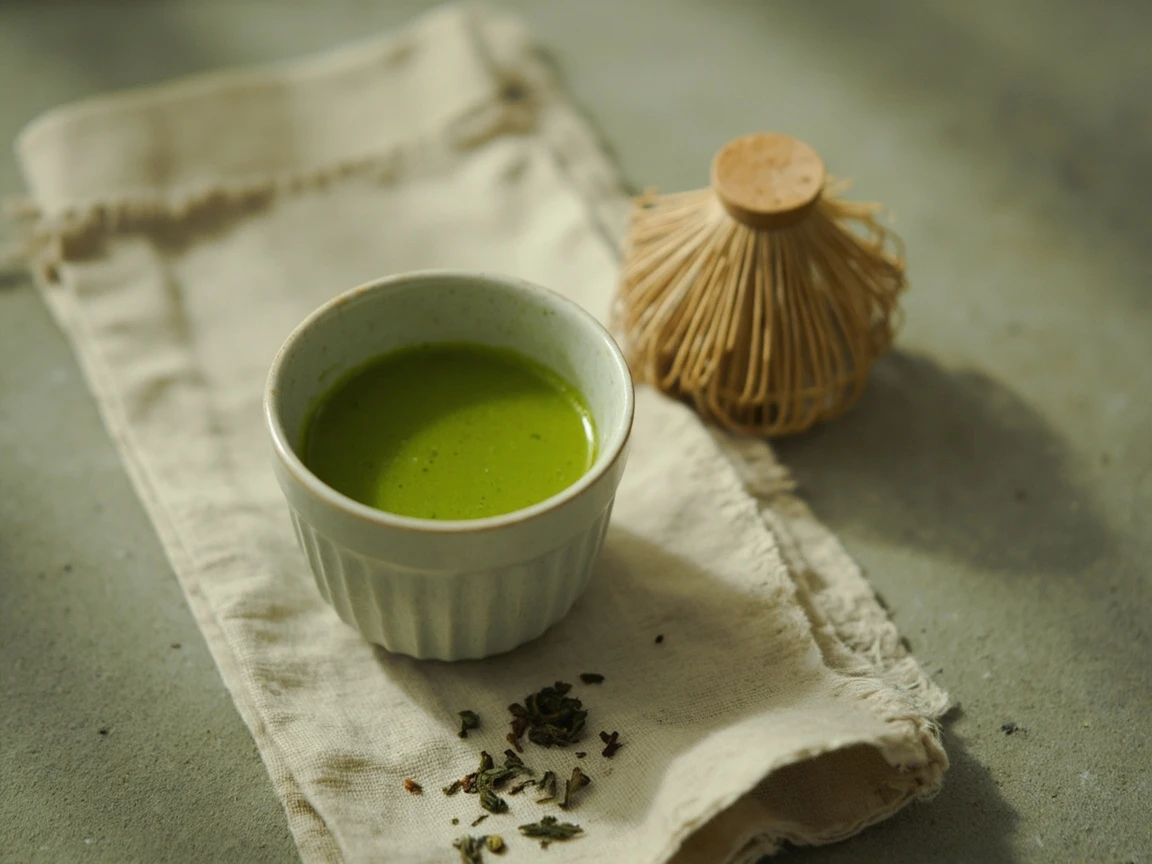
A natural question: can't you just drink tea? A cup of green tea contains only about 6–25 mg of L-theanine — well below the 100–400 mg used in research — alongside caffeine. Tea is a pleasant way to get a light dose of the calm-alert effect, but if you want a research-level amount without the caffeine, a supplement is the practical route. If the caffeine is the part that concerns you, our caffeine cutoff calculator shows how much is left by bedtime.
Should You Take L-Theanine with Caffeine?
If L-theanine has a killer app, this is it. Taken with caffeine, it smooths out the jitters, anxiety, and crash while preserving — even improving — the focus. This combination is the most reliably replicated finding in the entire theanine literature.
A landmark 2008 study in the Journal of Nutrition used EEG to show the caffeine-plus-theanine pairing increased alpha-wave activity and improved attention. A 2021 systematic review in Cureus concluded the combination reliably improved attention-switching accuracy and subjective alertness versus placebo.
The practical recipe: pair roughly 100 mg of caffeine with about 200 mg of L-theanine (a 1:2 ratio) — essentially adding theanine to a cup of coffee. Many people find it delivers the alertness of caffeine with noticeably less anxiety and jitter.

One honest note: reviews also find that theanine adds relatively little to attention beyond what caffeine already does, and the size of the benefit is inconsistent. It's a refinement, not a transformation.
Does L-Theanine Help with Anxiety?
For everyday, situational stress, the evidence is encouraging. Doses of 200–400 mg have been shown to reduce the physiological stress response and subjective anxiety in people facing a stressful task, generally within an hour and without sedation.
The important caveat: these effects are subtle and short-lived, and the evidence in people with diagnosed anxiety disorders is thin. L-theanine is a reasonable tool for taking the edge off a stressful day, but it's not a treatment for an anxiety disorder. For a stronger evidence base on stress adaptogens, compare it with our review of ashwagandha for stress and sleep, and for the physiology, see how chronic stress affects the brain.
Because it works within about an hour and doesn't sedate you, theanine is well suited to a specific, known stressor — a presentation, a flight, a hard conversation. Take 200 mg an hour beforehand and you may feel steadier without feeling dulled. For a constant background of stress, though, the daily-habit tools tend to matter more than an as-needed capsule.
Does L-Theanine Help You Sleep?
This is the most misunderstood benefit. L-theanine does not reliably make you fall asleep faster — studies generally don't show it shortening the time to fall asleep. What it appears to do is improve subjective sleep quality by lowering pre-sleep mental arousal: it quiets the racing mind so sleep can happen more naturally.

That makes it a "calm the system down" aid rather than a sedative, and it's why it's often stacked with magnesium for sleep and stress. If your sleep problem is a busy brain at bedtime, theanine may help; if it's poor sleep architecture or timing, the bigger levers are in our guide to optimizing sleep.
How Does L-Theanine Compare to Magnesium and Melatonin?
Theanine is one of several popular calm-and-sleep supplements, and they aren't interchangeable — each works through a different mechanism, so the right one depends on your specific issue.
- vs magnesium: Magnesium supports the nervous system and muscle relaxation broadly and corrects a common dietary shortfall; theanine specifically targets a busy, racing mind. They're complementary and are often taken together.
- vs ashwagandha: Ashwagandha is an adaptogen that lowers cortisol over weeks of daily use — better for chronic, ongoing stress. Theanine acts within an hour, so it's better for acute, in-the-moment calm.
- vs melatonin: Melatonin is a hormone that shifts your body clock and signals "it's night" — useful for jet lag or delayed sleep timing. Theanine doesn't touch your clock; it just lowers pre-sleep arousal. They solve different problems.
If your challenge is a racing mind or situational stress, theanine is a sensible first try. If it's timing, a deficiency, or a long-term stress load, one of the others may be the better fit — and none of them replaces the fundamentals.
How Much L-Theanine Should You Take?
Theanine is refreshingly simple to use:
- For calm focus with caffeine: about 200 mg alongside ~100 mg of caffeine.
- For daytime stress: 200 mg as needed, up to about 400 mg.
- For pre-sleep wind-down: 100–200 mg, 30–60 minutes before bed.
- What to buy: look for pure L-theanine — Suntheanine is a well-known trademarked, high-purity form — and choose a third-party-tested product (NSF or Informed Choice) so you know what's in the capsule.
- Skip proprietary blends. Many "calm" and "sleep" formulas bury a small, underdosed amount of theanine inside a blend without telling you how much. A single-ingredient product, or a transparent label listing the exact milligrams, is the only way to know you're getting a research-level dose.
How we chose these picks: selections are based on published label data — active ingredient per serving, cost per unit of active ingredient, third-party testing, and single-ingredient formulas over proprietary blends. We do not physically test supplements, accept free products, or publish star ratings we cannot verify. Affiliate commission never determines what is recommended. Read our full methodology.
- Uses Suntheanine, the patented high-purity form used in research
- 200 mg per softgel — matches the studied calm-focus dose
- One softgel alongside coffee is the classic stack
As an Amazon Associate, we earn from qualifying purchases.
- 200 mg veg capsules at a budget price per dose
- Simple formula from an established GMP manufacturer
- Easy to split timing: with coffee by day or before bed to wind down
As an Amazon Associate, we earn from qualifying purchases.
Is L-Theanine Safe? Who Should Skip It
L-theanine has an excellent short-term safety profile and is generally well tolerated, though long-term safety data is limited. A few honest caveats:
- Vivid dreams or parasomnias: some experts advise against taking theanine before sleep if you're prone to very vivid dreams, night terrors, or sleepwalking, as it may intensify them.
- Blood pressure and medication: if you take blood-pressure or stimulant medication, check with your doctor, since theanine can have mild effects and interactions.
- Pregnancy and breastfeeding: data is limited — talk to your provider.
Above all, treat theanine as a gentle complement to the fundamentals — sleep, exercise, stress management — not a substitute for them or for professional care.
The Bottom Line
L-theanine is one of the better-tolerated, better-evidenced "calm" supplements, as long as you keep expectations realistic. Its standout use is smoothing caffeine into clean, jitter-free focus; it can also take the edge off situational stress and quiet a racing mind at bedtime. The effects are real but gentle. Pair 200 mg with your coffee or take it before bed, buy a third-party-tested form, and think of it as a nudge in the right direction rather than a magic bullet.
L-Theanine FAQ
What does L-theanine do?
L-theanine is an amino acid from tea that promotes "calm alertness" — it boosts relaxing alpha brain waves and GABA activity without making you drowsy. Its best-proven use is smoothing out caffeine's jitters while preserving focus; it also modestly eases situational stress.
How much L-theanine should I take?
Common doses are 100–200 mg before bed for wind-down, 200 mg paired with about 100 mg of caffeine for calm focus, and up to 400 mg for daytime stress. Start on the lower end and see how you respond.
Does L-theanine help you sleep?
It won't knock you out. Rather than shortening the time to fall asleep, L-theanine appears to improve subjective sleep quality by lowering pre-sleep mental arousal — quieting a racing mind. It's often combined with magnesium for this reason.
Can you take L-theanine with coffee?
Yes — that's its most popular and best-supported use. About 200 mg of L-theanine with ~100 mg of caffeine (a 1:2 ratio) tends to preserve caffeine's alertness while reducing the jitters and anxiety.
Are there side effects to L-theanine?
It's generally very well tolerated with few reported side effects. The main cautions: it may intensify vivid dreams or parasomnias in susceptible people, and anyone on blood-pressure or stimulant medication, or who is pregnant, should check with a doctor first.
Is L-theanine better than magnesium for sleep?
They work differently and are often used together. L-theanine quiets a busy mind before bed, while magnesium supports relaxation and the nervous system more broadly. If bedtime overthinking is your issue, theanine may help; see our magnesium guide for that side of the equation.
References
The 200 mg dose and the calm-without-sedation findings described here come from the following clinical sources:
- Effects of L-Theanine Administration on Stress-Related Symptoms and Cognitive Functions in Healthy Adults: A Randomized Controlled Trial — Nutrients (PMC)
- The Effects of Green Tea Amino Acid L-Theanine Consumption on the Ability to Manage Stress and Anxiety Levels: a Systematic Review — Plant Foods for Human Nutrition (PubMed)
- The effects of L-theanine supplementation on the outcomes of patients with mental disorders: a systematic review — PMC

Founder & Editor
Xiujun Ma is the founder and editor of Home Wellness Science, where he researches and edits evidence-based guides on sleep, nutrition, supplements, air and water quality, fitness, and the home environment. His focus is translating peer-reviewed research into practical, no-hype guidance.
Related Articles