How Much Protein Per Day Do You Actually Need?
Disclosure: This article may contain affiliate links. We may earn a small commission at no extra cost to you. This helps support our work in providing evidence-based wellness content.
How Much Protein Per Day Do You Actually Need?
Ask ten sources how much protein per day you need and you'll get ten answers — from the official 0.8 grams per kilogram to the gym mantra of "a gram per pound." The confusion is real, but the science is actually fairly settled. The short version: the government's minimum is a floor to prevent deficiency, not a target for thriving, and most people — especially anyone who exercises or is over 50 — do better with meaningfully more.
Here's the evidence-based breakdown by goal and age, the per-meal "sweet spot," the myths worth retiring (yes, including the kidney one), and exactly how to hit your number without obsessing over it.
Is the Protein RDA Enough?
The Recommended Dietary Allowance for protein is 0.8 grams per kilogram of body weight per day — about 58g for a 160-pound person. It's important to understand what that number is: the amount set to prevent deficiency in a sedentary adult, derived from nitrogen-balance studies. It's the minimum to avoid a problem, not the amount that optimizes muscle, strength, satiety, or healthy aging.
That distinction matters because most protein advice quietly conflates "enough to not be deficient" with "the right amount for your goals." For anyone who lifts, runs, is trying to lose fat while keeping muscle, or is simply getting older, the optimal intake sits well above the RDA.
How Much Protein Do You Need to Build Muscle?
If your goal is building or preserving muscle, the research converges on a clear range. A widely cited 2018 meta-analysis in the British Journal of Sports Medicine found that protein intakes up to about 1.6 g/kg/day (roughly 0.73 g/lb) maximized muscle gains from resistance training — with little added benefit beyond that point for most people.
A practical target for active people is 1.6–2.2 g/kg/day. The popular "1 gram per pound of body weight" rule (about 2.2 g/kg) lands at the upper end — more than strictly necessary, but a simple, safe heuristic that guarantees you're covered.
Protein only builds muscle in the presence of a training stimulus, so it works hand in hand with resistance exercise and adequate recovery. It also pairs naturally with creatine, the other supplement with strong evidence for strength and lean mass. Protein supplies the raw material; training and creatine help you use it.
How Much Protein Do You Need After 50?
Protein needs rise with age, and this is where the RDA fails people most. As we get older, our muscles become less responsive to protein — a phenomenon called anabolic resistance — while age-related muscle loss (sarcopenia) accelerates. The result: older adults need more protein to maintain muscle, not less.
Expert groups, including the PROT-AGE and ESPEN guidelines, recommend 1.0–1.2 g/kg/day as a minimum for healthy older adults, and 1.2–1.5 g/kg/day for those who are active or managing illness. The payoff is real: one study found that older men eating 1.6 g/kg/day gained nearly twice the muscle from resistance training as those eating the RDA of 0.8 g/kg.
For anyone over 50, protein plus strength training is one of the highest-leverage things you can do for independence and healthy aging — arguably more important than any single supplement.
How Much Protein Per Meal?
Total daily intake matters most, but how you distribute it has a smaller, real effect. Your body maximizes muscle protein synthesis from a given meal at roughly 20–40 grams of protein (about 0.4 g/kg per meal), driven largely by the amino acid leucine crossing a threshold of about 2.5–3 grams.
This is also where the famous "your body can only absorb 30 grams of protein at once" claim falls apart. It's a myth. Your gut absorbs essentially all the protein you eat — a bigger meal just digests over a longer window. The 20–40g figure is about maximizing the muscle-building signal from a single meal, not a limit on absorption. Eating 50g in one sitting isn't "wasted"; the surplus is simply used more slowly and for other jobs around the body.
Does Protein Timing and Distribution Matter?
Slightly. Spreading protein across three to four meals of 25–40g, a few hours apart, appears marginally better for muscle than getting the same total in one or two big hits — because each meal above the leucine threshold triggers a fresh round of muscle protein synthesis, and the pathway needs a few hours to reset between pulses.
But keep the hierarchy straight: total daily protein is the main event, distribution is a minor optimization, and the old "anabolic window" panic about slamming a shake within 30 minutes of a workout is largely overblown. Hit your daily number first, spread it reasonably, and don't stress the clock.
What Are the Best Protein Sources?
Not all protein is equal. "Complete" proteins contain all nine essential amino acids in good ratios; most animal proteins — meat, fish, eggs, dairy — qualify, as do a few plants like soy and quinoa. Animal proteins also tend to be more leucine-rich gram for gram, which is why whey is a go-to for muscle.
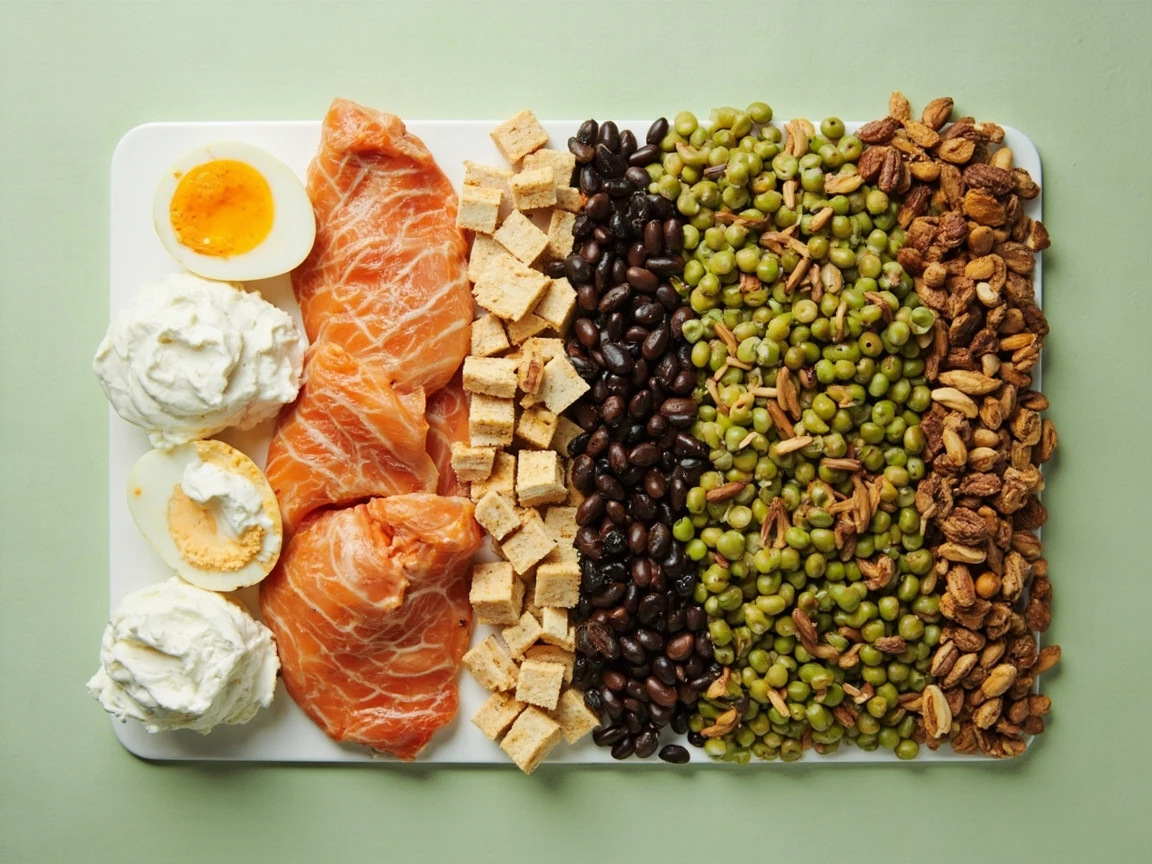
Plant proteins work well too — you just benefit from variety and slightly higher totals. Good options span both worlds:
- Animal: chicken, fish, eggs, Greek yogurt, cottage cheese, and whey.
- Plant: lentils, beans, tofu and tempeh, edamame, and higher-protein grains.
If you eat mostly plants, aim toward the higher end of your range and mix sources across the day so you cover all the essential amino acids. Whole-food protein also arrives packaged with the fiber and micronutrients of an anti-inflammatory, whole-food diet. One note on collagen: it's a protein, but an incomplete one, so it doesn't count toward your muscle-building total — see our collagen guide for what it's actually good for.
Is Too Much Protein Bad for You?
For healthy people, the fears are mostly unfounded. The most persistent one — that high protein damages your kidneys — is not supported by the evidence in people with healthy kidneys. Reviews and clinics like the Mayo Clinic are clear that the kidney concern applies to those with existing kidney disease, not to healthy adults eating a high-protein diet.
A few honest caveats:
- Existing kidney disease: if you have it, protein needs are individualized — work with your doctor.
- Hydration and fiber: a higher-protein diet sits easier when you drink enough water and don't crowd out vegetables and fiber.
- Balance, not just protein: more protein shouldn't mean zero carbs or fat — those matter for performance, hormones, and overall health too.
Within normal dietary ranges, there's no established "toxic" protein ceiling for healthy adults. The practical limit is appetite and variety, not danger.
How Do You Actually Hit Your Protein Target?
Once you know your number, execution is simple. First, do the math: multiply your body weight in kilograms by your target (say, 1.6 g/kg). A 70 kg (154 lb) active person lands around 112g/day — roughly 30–40g across three meals plus a snack.

A few tricks make it painless:
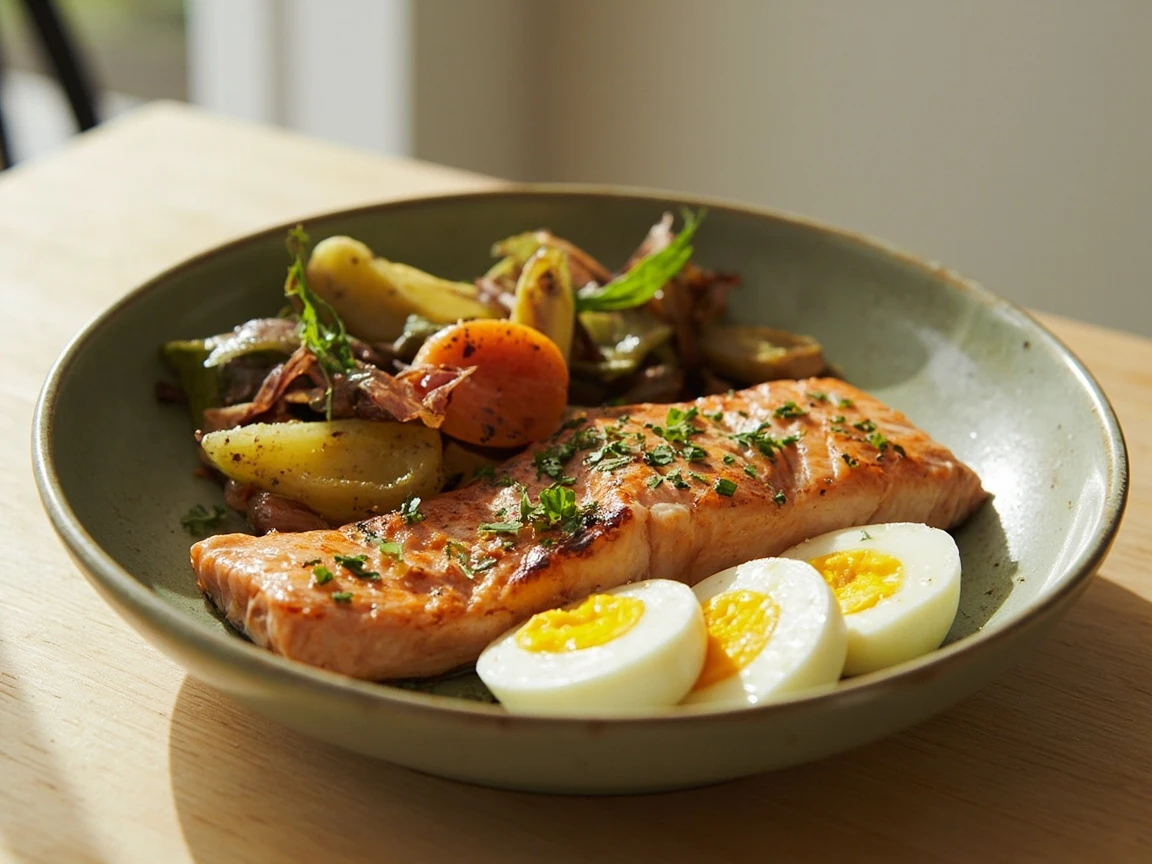
- Anchor every meal with protein first. Eggs at breakfast; a palm-sized (or two) portion of meat, fish, tofu, or legumes at lunch and dinner. A palm of cooked protein is roughly 20–30g.
- Lean on high-protein staples: Greek yogurt, cottage cheese, edamame, and a scoop of whey or a plant blend close gaps fast.
- Adjust for your eating window. If you fast or eat in a short window, you'll need bigger protein hits per meal to reach your total.
- Track for a week. Most people badly misjudge their intake in one direction or the other. A few days of logging recalibrates your eye for good.
How we chose these picks: selections are based on published label data — active ingredient per serving, cost per unit of active ingredient, third-party testing, and single-ingredient formulas over proprietary blends. We do not physically test supplements, accept free products, or publish star ratings we cannot verify. Affiliate commission never determines what is recommended. Read our full methodology.
- About 24 g of complete, leucine-rich protein per scoop
- The most established name in whey — widely third-party tested
- An easy way to close a 20–40 g per-meal gap
As an Amazon Associate, we earn from qualifying purchases.
- Hydrolyzed whey isolate — fast-digesting with minimal lactose
- Roughly 25 g protein per scoop with very little fat or carbs
- Gentler option if regular whey concentrate upsets your stomach
As an Amazon Associate, we earn from qualifying purchases.
- About 21 g per serving from a pea-based blend — vegan and dairy-free
- Blend approach covers the amino acids single plant sources miss
- Aim slightly higher on dose to match whey leucine content
As an Amazon Associate, we earn from qualifying purchases.
The Bottom Line
How much protein per day do you actually need? Use the 0.8 g/kg RDA only if your goal is to barely avoid deficiency. If you want to build or keep muscle, aim for about 1.6–2.2 g/kg; if you're over 50, treat 1.2–1.6 g/kg as a floor and pair it with strength training. Spread it across a few meals of 25–40g, favor complete sources (with variety if you're plant-based), and ignore the kidney and 30-gram myths. Protein is one of the rare nutrition levers where getting it right pays off in muscle, satiety, and healthy aging all at once.
Protein Intake FAQ
How much protein do I need per day to build muscle?
Aim for about 1.6–2.2 grams per kilogram of body weight per day, paired with resistance training. A 2018 meta-analysis found muscle gains largely plateau around 1.6 g/kg, so the popular "1 gram per pound" rule (roughly 2.2 g/kg) is a safe upper target rather than a strict requirement.
Is 0.8 grams of protein per kilogram enough?
Only to prevent deficiency. The 0.8 g/kg RDA is a minimum for sedentary adults, not an optimal target. If you exercise, want to preserve muscle while losing fat, or are over 50, you'll do better with meaningfully more.
Can your body only absorb 30 grams of protein per meal?
No — that's a myth. Your gut absorbs essentially all the protein you eat; a larger meal simply digests over a longer time. The 20–40g "sweet spot" refers to maximizing the muscle-building signal from a single meal, not a cap on how much you can absorb.
How much protein do older adults need?
More than younger adults, because of anabolic resistance and muscle loss. Expert guidelines suggest 1.0–1.2 g/kg/day as a minimum for healthy older adults and 1.2–1.5 g/kg for those who are active or ill — ideally combined with strength training.
Is too much protein bad for your kidneys?
Not for people with healthy kidneys. Research and major clinics find no evidence that high protein harms normal kidney function; the concern applies only to those with pre-existing kidney disease, who should individualize intake with their doctor.
How much protein should I eat per meal?
Roughly 20–40 grams, or about 0.4 g/kg, spread across three to four meals. That's enough to cross the leucine threshold (about 2.5–3g) that maximally triggers muscle protein synthesis, while your total daily intake remains the most important factor.
References
The daily targets and the per-meal distribution advice in this guide are based on the following sources:
- International Society of Sports Nutrition Position Stand: protein and exercise — Journal of the ISSN, 2017 (PMC)
- How much protein can the body use in a single meal for muscle-building? Implications for daily protein distribution — Journal of the ISSN (PubMed)
- Dietary Proteins — MedlinePlus, NIH National Library of Medicine

Founder & Editor
Xiujun Ma is the founder and editor of Home Wellness Science, where he researches and edits evidence-based guides on sleep, nutrition, supplements, air and water quality, fitness, and the home environment. His focus is translating peer-reviewed research into practical, no-hype guidance.
Related Articles