Glycine for Sleep: Benefits, Dosage, and the Evidence

Disclosure: This article may contain affiliate links. We may earn a small commission at no extra cost to you. This helps support our work in providing evidence-based wellness content.
Does Glycine Help You Sleep?
If you've gone down the sleep-supplement rabbit hole, you've met magnesium and melatonin — but glycine for sleep is the quieter option that deserves more attention. It's a simple amino acid with a genuinely interesting, well-studied mechanism: it helps lower your body temperature, which is one of the physical triggers that lets you fall asleep.
The evidence is modest but real, the dose is simple, and the safety profile is excellent. Here's how glycine works, what the studies actually found, and where it fits alongside the other evidence-based sleep aids.
How Does Glycine Work for Sleep?
Glycine does two things that matter for sleep. First, it's an inhibitory neurotransmitter — one of the brain's natural "brakes" — so it has a mild calming effect that quiets nervous-system activity.
Second, and more distinctively, glycine helps lower your core body temperature. It does this by increasing blood flow to your hands and feet, which sheds heat from the surface. Studies have measured an average drop of roughly 0.3°C after a bedtime dose.
Your core temperature naturally falls as you drift off — it's one of the body's key "time to sleep" signals. Glycine appears to nudge that cooling process along, which is why it can help you fall asleep faster and reach deep sleep sooner.

This is also why a cool bedroom helps sleep in the first place, and why glycine and good sleep-environment basics work in the same direction — both are helping your body hit the temperature drop it's looking for.
What Do the Glycine Sleep Studies Show?
The research on glycine is small in scale but consistent in direction. The most-cited work comes from a series of Japanese studies on people with mild sleep complaints:
- Faster sleep onset. In a crossover trial, 3 g of glycine before bed shortened the time to fall asleep, and a polysomnography study found it reduced the time to reach deep, slow-wave sleep.
- Better sleep quality. Participants taking 3 g reported more satisfying sleep and felt more refreshed on waking.
- Less daytime fatigue. After nights of restricted sleep, glycine reduced daytime sleepiness and improved performance — useful for anyone whose sleep is often cut short.
The honest framing: these are small studies, mostly in people with mild insomnia, and glycine won't override a serious sleep disorder or bad sleep habits. But for the common problem of "I lie there too long and don't feel rested," the mechanism and the data line up.
Glycine, Magnesium, or L-Theanine: Which Works Best?
Glycine is one of three well-tolerated, evidence-informed sleep supplements that get used together for good reason — each targets a different piece of the falling-asleep puzzle.
- Glycine works on body temperature and gentle nervous-system calming — best when you struggle to drift off and cool down.
- Magnesium supports broad nervous-system and muscle relaxation and corrects a common dietary shortfall.
- L-theanine quiets a busy, racing mind by boosting calming alpha brain waves.
They're complementary rather than competing, which is why they often appear together in sleep formulas. Melatonin is a different tool entirely — a hormone that shifts your body clock, better suited to jet lag or delayed sleep timing than to everyday trouble falling asleep. If you're layering supplements, add one at a time so you can tell what's actually helping.
How Much Glycine Should You Take for Sleep?
The protocol from the research is refreshingly specific:
- Dose: 3 grams is the sweet spot used in the studies. Doses of 1–2 g haven't shown consistent effects, and going higher (5–10 g) is safe but adds no extra sleep benefit.
- Timing: take it 30–60 minutes before bed, when the cooling and calming effects can line up with your natural wind-down.
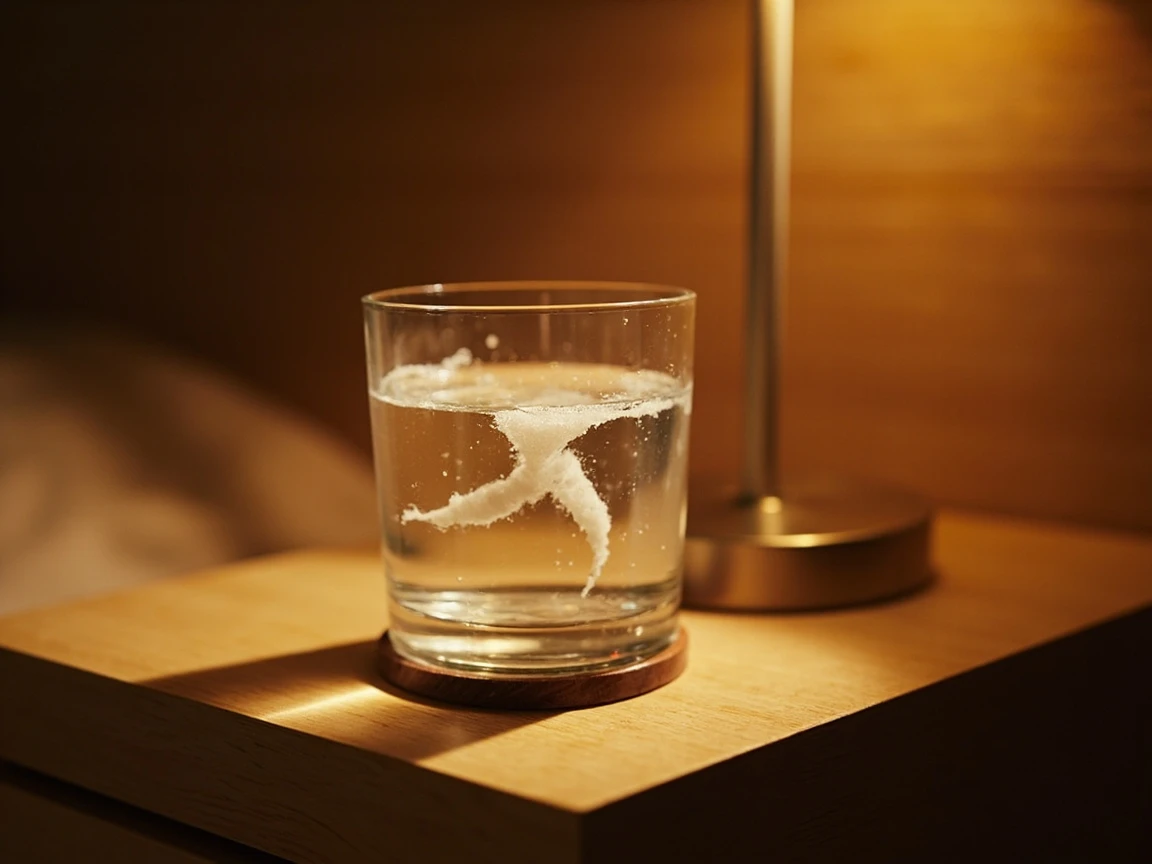
- Form: glycine powder has a naturally mild, slightly sweet taste and dissolves easily in water — it's one of the few supplements that's pleasant to take. Capsules work too, though you'll need several to reach 3 g.
- Give it a week. Benefits typically show up within 3–7 nights of consistent use rather than the very first night.
- Food doesn't matter much. Glycine is well absorbed with or without food, so take it whenever fits your wind-down — stirred into a small glass of water is the easiest option.
As with any sleep aid, glycine is a supporting act. The headliners are consistent timing, light exposure, and the fundamentals covered in our guide to optimizing sleep. A supplement can smooth the edges; it can't fix an erratic schedule.
How we chose these picks: selections are based on published label data — active ingredient per serving, cost per unit of active ingredient, third-party testing, and single-ingredient formulas over proprietary blends. We do not physically test supplements, accept free products, or publish star ratings we cannot verify. Affiliate commission never determines what is recommended. Read our full methodology.
- Pure glycine with nothing added — easy to measure the studied 3 g dose
- Mildly sweet and dissolves easily in water before bed
- From an established GMP supplement manufacturer
As an Amazon Associate, we earn from qualifying purchases.
- Bulk single-ingredient powder — lowest cost per 3 g serving
- Resealable pouch sizes up to a year-plus supply
- Same simple protocol: 3 g in water, 30–60 minutes before bed
As an Amazon Associate, we earn from qualifying purchases.
Can You Get Enough Glycine from Food?
You don't only get glycine from a tub of powder. It's abundant in the connective tissue of animals, which is why it's concentrated in bone broth, gelatin, and slow-cooked cuts with skin and cartilage.

Here's a neat connection: collagen is roughly one-third glycine, so a collagen supplement delivers a meaningful glycine dose as a side effect — one reason some people report better sleep on collagen. If you enjoy bone broth or already take collagen, you're getting glycine without a separate product. A dedicated glycine supplement is simply the cheapest, most precise way to hit the studied 3-gram dose.
What Else Does Glycine Do?
Sleep is the headline use, but glycine is a genuinely versatile amino acid your body relies on around the clock. A few evidence-based extras:
- Collagen and connective tissue: glycine is a primary building block of collagen, so it supports skin, tendons, and joints.
- Glutathione production: it's one of three amino acids your body uses to make glutathione, its master antioxidant, which helps manage oxidative stress.
- Metabolic support: some research links higher glycine intake to better blood-sugar regulation, though this evidence is still emerging.
None of these are reasons to megadose — a normal diet plus the 3-gram bedtime dose covers them. But they're a reminder that glycine isn't a niche "sleep hack"; it's a workhorse nutrient with sleep as one useful application.
Is Glycine Safe? Side Effects to Know
Glycine is one of the safest supplements you can take. Your body makes it naturally and uses it constantly, and studies report very few side effects even at doses well above 3 g. The occasional complaint is mild — a bit of stomach upset or drowsiness if taken in a large dose.
A few sensible notes:
- Clozapine interaction: glycine may reduce the effectiveness of this specific antipsychotic medication — if you take it, avoid glycine.
- Pregnancy and breastfeeding: supplemental doses haven't been well studied — check with your provider.
- Persistent insomnia: if poor sleep lasts for weeks, or you snore heavily and wake unrefreshed, see a doctor rather than relying on supplements — it may point to an underlying sleep disorder.
The Bottom Line
Glycine for sleep is a quietly compelling option: a cheap, safe amino acid with a clear mechanism — cooling your body and calming your nervous system — and small studies showing faster sleep onset, deeper sleep, and less daytime fatigue. Take 3 grams in water 30–60 minutes before bed, give it a week, and treat it as a gentle nudge on top of solid sleep habits. If you already take collagen or drink bone broth, you may be getting some already. It won't cure insomnia, but for the common "takes too long to drift off" problem, it's one of the better-value tools on the shelf.
Glycine for Sleep FAQ
Does glycine really help you sleep?
The evidence is modest but consistent. Small studies show that 3 g of glycine before bed helps people fall asleep faster, reach deep sleep sooner, and feel more refreshed, likely by lowering core body temperature. It works best for mild sleep trouble, not serious sleep disorders.
How much glycine should I take for sleep?
Three grams, taken 30–60 minutes before bed, is the dose used in the research. Lower doses of 1–2 g haven't shown consistent effects, and higher doses of 5–10 g are safe but don't add sleep benefit.
How does glycine make you sleepy?
Glycine is an inhibitory neurotransmitter that mildly calms the nervous system, and it increases blood flow to your hands and feet, which lowers core body temperature by roughly 0.3°C. That temperature drop is one of the body's natural signals to fall asleep.
Is glycine or magnesium better for sleep?
They work differently and are often combined. Glycine targets body temperature and sleep onset; magnesium supports broader nervous-system and muscle relaxation. If you struggle to cool down and drift off, glycine may help; if you're also stressed or deficient, magnesium is worth adding. For more on this, see our ranked comparison of sleep supplements.
Can you take glycine every night?
Yes. Glycine is very safe for nightly use — your body produces and uses it constantly. The main exceptions are people taking the antipsychotic clozapine (glycine can reduce its effect) and those who are pregnant or breastfeeding, who should check with a provider first.
Does collagen contain glycine?
Yes — collagen is about one-third glycine, so a collagen supplement or bone broth delivers a meaningful glycine dose. That overlap is one reason some people notice better sleep when taking collagen, though a dedicated glycine supplement is the cheapest way to hit the studied 3-gram dose.
References
The 3-gram dose and the sleep-onset findings described here come from the following clinical sources:
- Glycine ingestion improves subjective sleep quality in human volunteers, correlating with polysomnographic changes — Sleep and Biological Rhythms, 2007
- The effects of glycine on subjective daytime performance in partially sleep-restricted healthy volunteers — Frontiers in Neurology (PubMed)
- An Update of the Promise of Glycine Supplementation for Enhancing Physical Performance and Recovery — PMC

Founder & Editor
Xiujun Ma is the founder and editor of Home Wellness Science, where he researches and edits evidence-based guides on sleep, nutrition, supplements, air and water quality, fitness, and the home environment. His focus is translating peer-reviewed research into practical, no-hype guidance.
Related Articles