
Krill Oil vs Algae Oil vs Fish Oil: A Science Comparison (2026)
Disclosure: This article may contain affiliate links. We may earn a small commission at no extra cost to you. This helps support our work in providing evidence-based wellness content.
The krill oil vs algae oil decision comes down to four practical questions: which one delivers more usable omega-3, which absorbs better, which carries less ecological and contamination baggage, and which fits your dietary needs. Both are valid alternatives to standard fish oil, but they answer those questions differently. Krill oil leads on phospholipid binding and brings astaxanthin along for the ride. Algae oil wins on contamination, sustainability, and dietary compatibility — and is the only omega-3 source vegans can use without compromise.
This comparison cuts through the marketing claims and looks at what the research actually supports. We'll cover EPA and DHA content, absorption mechanisms, sustainability data, and the practical cost-per-gram calculation that should drive most buying decisions. If you're choosing between krill and algae for the first time — or wondering whether the krill oil you've been buying is worth the premium — the answers are below.
| Factor | Krill oil | Algae oil | Fish oil (reference) |
|---|---|---|---|
| EPA+DHA per 1,000 mg oil | 120–200 mg | 200–400 mg (DHA-only) or 300–500 mg (EPA+DHA) | 300–400 mg standard; 600–800 mg concentrated |
| Omega-3 form | Phospholipid-bound | Triglyceride; premium formulas phospholipid-bound | Triglyceride / re-esterified triglyceride |
| Astaxanthin | Naturally present (50–200 mcg per softgel) | Sometimes — co-produced or added | Not naturally present |
| Contamination risk | Low (small, short-lived species) | None — grown in sealed tanks | Low with third-party-tested anchovy/sardine sources |
| Vegan / allergies | Not vegan; may trigger shellfish allergies | Vegan; safe with shellfish allergy | Not vegan; fish allergen |
| Sustainability | Defensible with MSC-certified sourcing | Best by a wide margin | Varies by fishery |
| Cost per gram EPA+DHA | Highest — roughly five to ten times fish oil | High — roughly two to four times fish oil | Lowest |
| Choose it if… | Fish-oil burps, want astaxanthin, fewer capsules | Vegan, pregnant, shellfish allergy, sustainability-first | Lowest cost, high daily doses |
Where Krill Oil Comes From
Krill are small, shrimp-like crustaceans that swarm the cold waters around Antarctica. They feed on phytoplankton (which is where their omega-3 fats originate) and form the base of the Southern Ocean food web. Commercial krill oil comes almost entirely from Antarctic krill (Euphausia superba), harvested under quotas managed by the Commission for the Conservation of Antarctic Marine Living Resources (CCAMLR).
What makes krill oil distinct from fish oil is the form the omega-3 fats are bound in. In fish, EPA and DHA are stored as triglycerides — three fatty acids attached to a glycerol backbone. In krill, a substantial portion of the EPA and DHA is bound as phospholipids — the same building blocks that make up cell membranes. This structural difference is the basis for most absorption claims around krill oil and is genuinely supported by the research, as we'll cover below.
Krill oil also naturally contains astaxanthin, a red carotenoid pigment that gives the oil its characteristic deep ruby color. Astaxanthin is a potent antioxidant in its own right and serves the secondary function of protecting the oil from oxidation before you take it — krill oil typically doesn't need the antioxidant additives that fish oil sometimes carries.
Where Algae Oil Comes From
Algae oil is produced from microalgae — single-celled organisms grown in controlled fermentation tanks, not harvested from the ocean. The microalgae species used commercially (most often Schizochytrium or Crypthecodinium) are the same organisms that produce the omega-3 fats that fish and krill bioaccumulate when they eat them. In other words, algae oil cuts out the middleman in the omega-3 food chain.
Because algae oil is grown in sealed tanks fed with controlled nutrients, it has none of the ocean contamination concerns that affect fish-sourced omega-3s — no heavy metals, no PCBs, no dioxins, no microplastics. The growing process is reproducible, scalable, and not dependent on wild populations or weather conditions.
Like krill oil, modern algae oils often contain omega-3 fats in phospholipid form alongside triglycerides, depending on the extraction method. Better formulations also include astaxanthin as a stabilizer — sometimes naturally co-produced by the algae, sometimes added separately. This is what makes premium algae oil genuinely comparable to krill oil on the two attributes (phospholipid binding + astaxanthin) that krill marketing focuses on most.
For people who don't eat fish — whether for dietary, ethical, or contamination reasons — algae oil is the only way to hit clinically meaningful EPA and DHA intakes without seafood. The relevant context here is broader: if you're building a supplement stack, our guide to the best omega-3 supplements compares all three sources side by side.
EPA and DHA Compared: Krill Oil vs Algae Oil vs Fish Oil
Here's where the marketing claims and the actual nutritional content diverge. EPA and DHA per gram of oil vary substantially between krill, fish, and algae products, and the totals on supplement labels can be misleading if you don't look at the right line.
Typical EPA + DHA content per gram of oil, based on label data from leading products:
- Standard fish oil: 300-400 mg combined EPA+DHA per 1,000 mg oil (30-40%)
- Concentrated fish oil: 600-800 mg combined EPA+DHA per 1,000 mg oil (60-80%)
- Krill oil: 120-200 mg combined EPA+DHA per 1,000 mg oil (12-20%)
- Algae oil (DHA-only): 200-400 mg DHA per 1,000 mg oil, often zero EPA
- Algae oil (EPA+DHA): 300-500 mg combined EPA+DHA per 1,000 mg oil
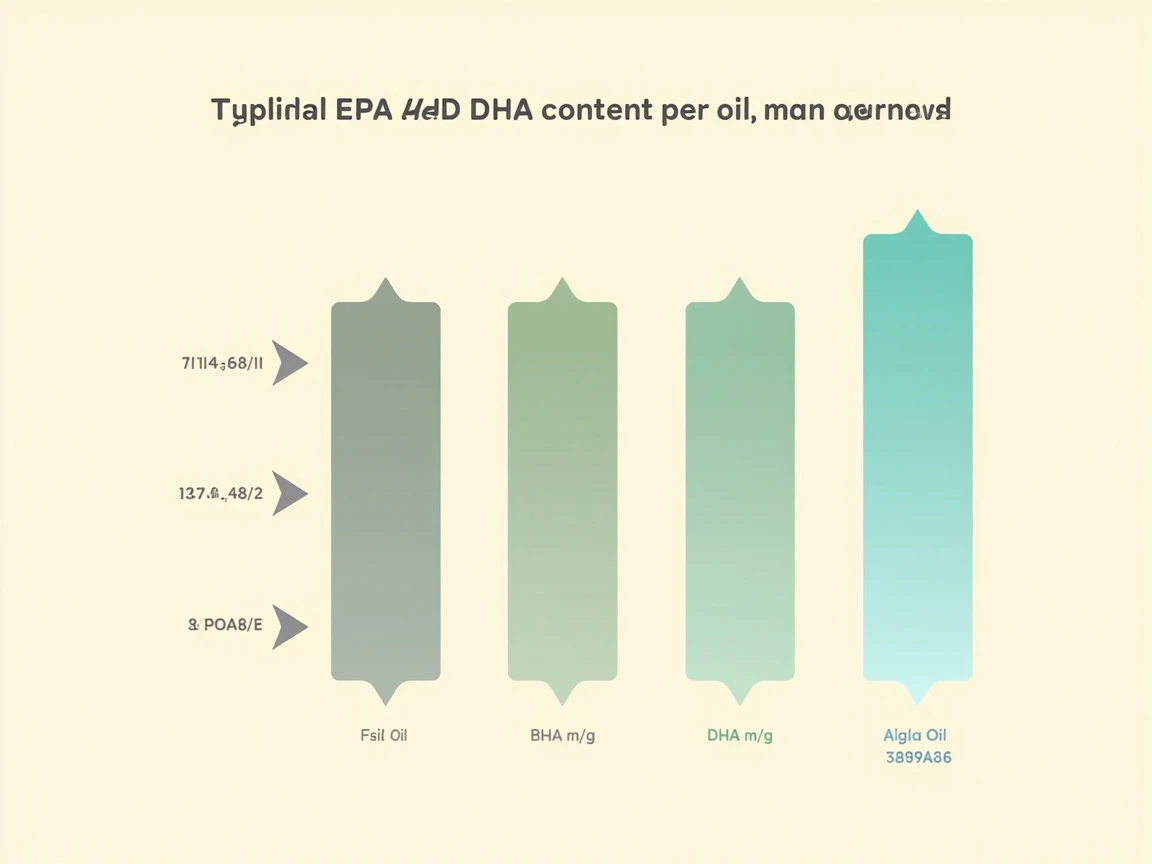
This is the part most consumers miss. Krill oil delivers significantly less EPA+DHA per gram than concentrated fish oil — usually about a third as much. A 1,000 mg krill oil softgel might give you 150 mg EPA+DHA, while a 1,000 mg concentrated fish oil softgel can give you 750 mg. To hit the same daily omega-3 intake from krill, you need to take 4-5 times as many capsules.
Algae oil sits in the middle — better than basic fish oil, comparable to or slightly below concentrated fish oil per gram, but available in vegan, DHA-only, and balanced EPA+DHA formats. Some algae products labeled as "DHA only" still deliver a few percent EPA, but if a balanced ratio matters to you, check the label carefully.
Is Algae Oil Better Than Fish Oil?
For most people, no — not on potency or price. Concentrated fish oil delivers 600–800 mg of combined EPA+DHA per gram of oil and algae oil 300–500 mg, yet algae costs roughly two to four times as much per gram of active omega-3 — you are paying more for less omega-3 per capsule.
Algae oil wins decisively on three things instead. It is the only non-seafood way to reach clinically meaningful EPA and DHA intakes, making it the default for vegans and anyone who does not eat fish. Because it is grown in sealed fermentation tanks rather than harvested from the ocean, it carries no heavy metals, PCBs, dioxins, or microplastics. And it is the most sustainable source by a wide margin, using little land or water and placing no pressure on wild populations.
There is also a food-chain argument worth knowing: microalgae are the organisms that actually produce EPA and DHA. Fish and krill accumulate those fats by eating algae, so algae oil simply removes the middleman.
The short answer: choose concentrated fish oil if cost per gram is what matters, and algae oil if you avoid seafood, are contamination-sensitive, or weight sustainability heavily. Both are better value per gram of EPA+DHA than krill.
Absorption: Does Phospholipid-Bound Omega-3 Matter?
The strongest marketing claim for krill oil is that the phospholipid form absorbs better than the triglyceride form in fish oil. The research is real but more nuanced than the marketing suggests.
A 2011 study in Lipids in Health and Disease by Schuchardt et al. compared krill oil, regular fish oil, and re-esterified triglyceride fish oil head-to-head in healthy volunteers. The result: krill oil produced higher plasma EPA levels than regular fish oil at the same dose, but the difference disappeared when fish oil was given as re-esterified triglycerides. In other words, the absorption advantage exists, but it's mostly relative to basic fish oil, not the high-quality formulations now common.
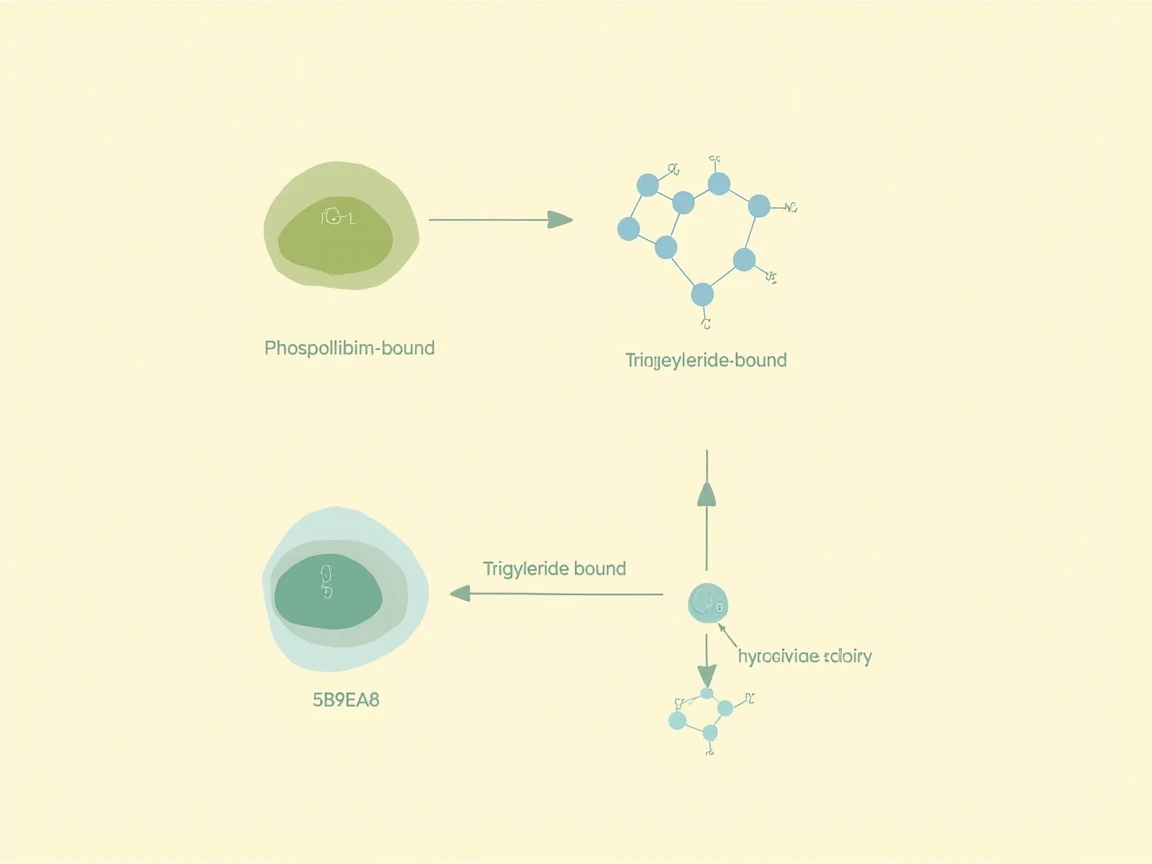
Why does phospholipid binding help? Phospholipids are amphipathic — they have a water-soluble end and a fat-soluble end, which lets them disperse into smaller droplets in the gut. Smaller droplets present more surface area to lipase enzymes, which speeds hydrolysis and absorption. Triglyceride-bound omega-3 has to be broken down first by gut lipase before being repackaged into chylomicrons. The phospholipid route is more direct.
The practical question is whether that absorption advantage is worth the 3-5x price premium per gram of EPA+DHA that krill oil typically commands. For most people: probably not, unless you specifically can't tolerate fish oil burps or care strongly about minimizing capsule count. The omega-3 status improvement you'd see from taking 1 gram of EPA+DHA daily from fish oil is the same as you'd see from 1 gram daily from krill oil — you're just paying significantly more per gram with krill.
Algae oil's absorption profile depends on formulation. Premium algae products that retain phospholipid binding (look for "phospholipid-bound" or "krill-equivalent absorption" on labels) match krill on this metric. Cheaper algae oils sold as triglycerides absorb like triglyceride fish oil — which is to say, perfectly well.
Astaxanthin: What Krill Brings and Algae Can Match
Astaxanthin is the second pillar of the krill oil marketing claim. It's a red carotenoid antioxidant with measurable activity against oxidative stress and some interesting (though smaller-scale) human trial data on inflammation, skin photoaging, and exercise recovery. Astaxanthin is also why krill oil resists oxidation better than fish oil and tends to have a longer shelf life.
The catch: the astaxanthin content of typical krill oil products is modest — usually 50-200 micrograms per softgel. Standalone astaxanthin supplements dose at 4-12 milligrams per day, which is 20-100 times what you'd get from a daily krill oil capsule. If astaxanthin is what you want, take astaxanthin directly; if omega-3 is what you want, the trace astaxanthin in krill is a nice bonus rather than a primary value.
Algae oils sometimes include astaxanthin too, either co-produced by the algae itself or added during processing. Read the label — algae products vary widely on this.
Sustainability and Sourcing
This is where the comparison gets clearer. Algae oil is the most sustainable omega-3 source by a wide margin. It's grown in tanks, uses very little water and land, doesn't depend on ocean ecosystems, and has zero contamination risk from heavy metals or microplastics.
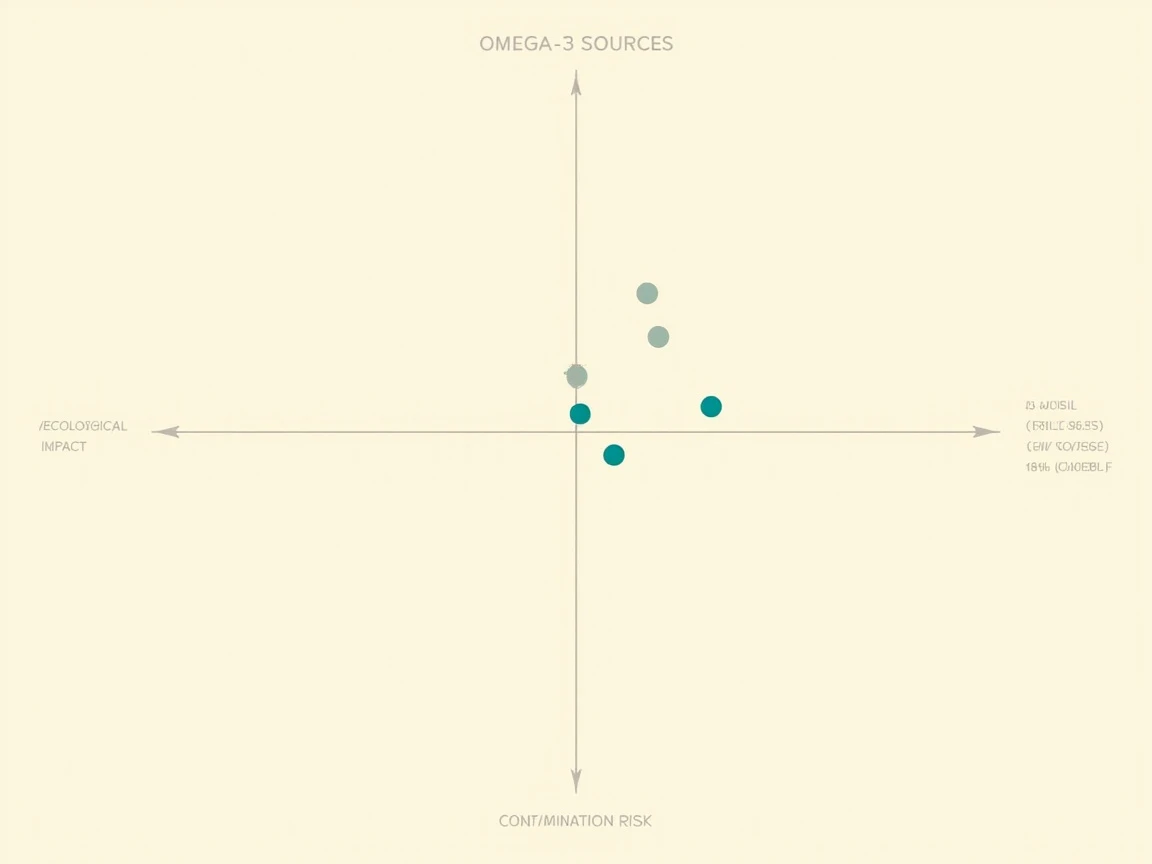
Krill harvesting raises legitimate ecological concerns. Krill are the foundational food source for whales, seals, penguins, and many fish species in the Antarctic ecosystem. The CCAMLR quotas are set conservatively — total catch is currently around 1% of estimated krill biomass — but climate change is shrinking sea ice habitat for krill, and any extractive pressure on a keystone species deserves scrutiny. Some krill brands carry Marine Stewardship Council (MSC) certification, which provides additional sourcing assurance.
Fish oil sustainability varies widely. Forage fish species (anchovy, sardine, menhaden) used for most fish oil are generally fast-reproducing and managed through quotas, but the cumulative pressure on these species supports both the supplement industry and global aquaculture feed. Heavy-metal contamination is also genuinely lower in small fish, which is why anchovy and sardine sources beat tuna or larger fish on this dimension.
If sustainability is a primary buying criterion, algae oil is the clear answer. Krill is defensible if you choose MSC-certified sources but harder to justify if you're optimizing for ecological footprint.
Cost Per Gram of EPA+DHA
Price per bottle is the wrong unit. The right unit is price per gram of combined EPA+DHA, because that's what your body actually uses. Comparing typical retail pricing in 2026:
- Concentrated fish oil (60-80% EPA+DHA): the baseline — the least expensive per gram of EPA+DHA
- Basic fish oil (30-40% EPA+DHA): about the same as concentrated fish oil, or a little more, because each softgel carries less omega-3
- Krill oil: roughly five to ten times concentrated fish oil
- Algae oil: roughly two to four times concentrated fish oil
Krill is the most expensive omega-3 source per gram of active ingredient. Algae oil costs more than fish oil but less than krill on average. If price is a primary factor, concentrated fish oil wins by a wide margin. Algae oil is a reasonable middle ground for vegans or contamination-sensitive buyers. Krill is a premium product justified mostly by the absorption + astaxanthin combination, which is real but probably not worth a 3-6x premium for most people.
Who Should Choose Which?
The decision matrix is fairly clean:
Choose krill oil if:
- You get reflux or "fish burps" from standard fish oil and need a more tolerable form
- You want astaxanthin alongside your omega-3, and don't want to take a separate supplement
- Cost is not a primary concern and you prefer fewer capsules per day
- You can verify MSC-certified sourcing
Choose algae oil if:
- You're vegan, vegetarian, or pescatarian-curious
- You're pregnant or have heavy-metal sensitivity (algae oil has zero ocean contamination risk)
- You're allergic to fish or shellfish (some people with shellfish allergies react to krill)
- Sustainability is a primary buying factor
Choose fish oil if:
- You want the lowest cost per gram of EPA+DHA
- You want high doses (1-3 grams daily) without paying premium prices
- You're fine with capsule count and don't have GI tolerability issues
For most healthy adults, concentrated fish oil from a third-party-tested brand is the rational default. Krill makes sense for the specific use cases above. Algae makes sense for vegans and for anyone whose values prioritize sustainability. Our omega-3 supplement comparison covers specific brand picks for each category.
One last note: total weekly EPA+DHA intake matters more than the source. The American Heart Association recommends 250-500 mg combined daily for general cardiovascular health, and most research on cognitive and inflammatory benefits uses 1-2 grams daily. Whatever source you choose, hitting the dose consistently is what produces results — not the marketing differences between sources.
How we chose these picks: selections are based on published label data — active ingredient per serving, cost per unit of active ingredient, third-party testing, and single-ingredient formulas over proprietary blends. We do not physically test supplements, accept free products, or publish star ratings we cannot verify. Affiliate commission never determines what is recommended. Read our full methodology.
- Phospholipid-bound omega-3s plus 360 mcg natural astaxanthin per two-softgel serving
- Friend of the Sea certified sourcing; tested for heavy metals, PCBs and dioxins
- The form that justifies krill over standard fish oil
As an Amazon Associate, we earn from qualifying purchases.
- More krill oil per softgel than most competitors
- Includes astaxanthin for oxidative stability
- Often easier on the stomach than fish oil (fewer burps)
As an Amazon Associate, we earn from qualifying purchases.
- Algae-sourced EPA + DHA — no fish or krill
- Closes the EPA gap that DHA-only vegan formulas leave
- No ocean-contaminant or marine-ecosystem concerns
As an Amazon Associate, we earn from qualifying purchases.
- Plant-based EPA + DHA from algal oil in triglyceride form, 1,020 mg omega-3 per serving
- Vegan Plantgel capsules — suitable for anyone avoiding all animal-derived oils
- A lower-cost vegan entry point than premium algae brands; same trusted brand as several picks on this site
As an Amazon Associate, we earn from qualifying purchases.
Frequently Asked Questions
Is krill oil better than algae oil for absorption?
Krill oil's phospholipid-bound form does absorb modestly better than triglyceride-bound omega-3, but premium algae oils that retain phospholipid structure match krill on this metric. The 2011 Schuchardt study showed krill's advantage shrinks when compared against high-quality re-esterified fish oil. For most people, the absorption difference is real but not large enough to justify a 3-5x price premium.
Can I get enough EPA from algae oil?
Yes, with the right product. Many algae oils are DHA-only or DHA-dominant. Look for formulations labeled "EPA + DHA" or that explicitly list both fatty acids on the supplement facts panel. Balanced EPA+DHA algae products typically deliver 300-500 mg combined per gram, comparable to concentrated fish oil.
Is krill oil safe for people with shellfish allergies?
Possibly not. Krill are crustaceans, and the proteins they share with shrimp and other shellfish can trigger allergic reactions in sensitized individuals. If you have a shellfish allergy, choose algae oil instead — it's the safer omega-3 source for allergic populations. Some krill oil products use processing that removes most proteins, but verification is hard from a label alone.
Does krill oil have less mercury than fish oil?
Generally yes. Krill are small, short-lived, and feed at the bottom of the food chain, so they accumulate less mercury and other heavy metals than larger fish. That said, third-party-tested fish oils from anchovy or sardine sources are also very low in contaminants. Algae oil is the contamination-free baseline — zero ocean exposure means zero accumulated metals or microplastics.
Which is best for pregnancy: krill oil or algae oil?
Algae oil. Pregnancy raises DHA requirements substantially (for fetal brain development), and algae oil is the cleanest source — no mercury, no PCBs, no shellfish allergens, and no concerns about supplement sourcing for vegan or vegetarian mothers. Many prenatal supplements now use algae-derived DHA for this reason.
References
The EPA/DHA content, absorption, and cardiovascular-outcome evidence compared in this article come from the following sources:
- Omega-3 Fatty Acids — Health Professional Fact Sheet — NIH Office of Dietary Supplements
- Omega-3 Supplements: What You Need To Know — NIH National Center for Complementary and Integrative Health
- Omega-3 fatty acids for the primary and secondary prevention of cardiovascular disease — Cochrane Database of Systematic Reviews (PubMed)

Founder & Editor
Xiujun Ma is the founder and editor of Home Wellness Science, where he researches and edits evidence-based guides on sleep, nutrition, supplements, air and water quality, fitness, and the home environment. His focus is translating peer-reviewed research into practical, no-hype guidance.
Related Articles