Best Weighted Blankets for Sleep and Anxiety (2026)
Disclosure: This article may contain affiliate links. We may earn a small commission at no extra cost to you. This helps support our work in providing evidence-based wellness content.
Weighted blankets have moved from niche therapy tool to mainstream sleep accessory — and for good reason. Clinical research now shows they can meaningfully improve sleep quality, reduce anxiety symptoms, and even increase your body's natural melatonin production. But not all weighted blankets deliver on these promises equally. The best weighted blankets for sleep combine the right weight distribution, breathable materials, and quality construction to translate that research into real results.
We reviewed the latest clinical evidence alongside hands-on product testing to identify the weighted blankets worth buying in 2026 — whether you're targeting better sleep, anxiety relief, or both.
Do Weighted Blankets Actually Work?
Before spending money on a weighted blanket, you deserve to know what the science actually supports. The short answer: yes, with solid evidence for sleep improvement and promising (though still developing) evidence for anxiety.
Deep Pressure Stimulation and Your Nervous System
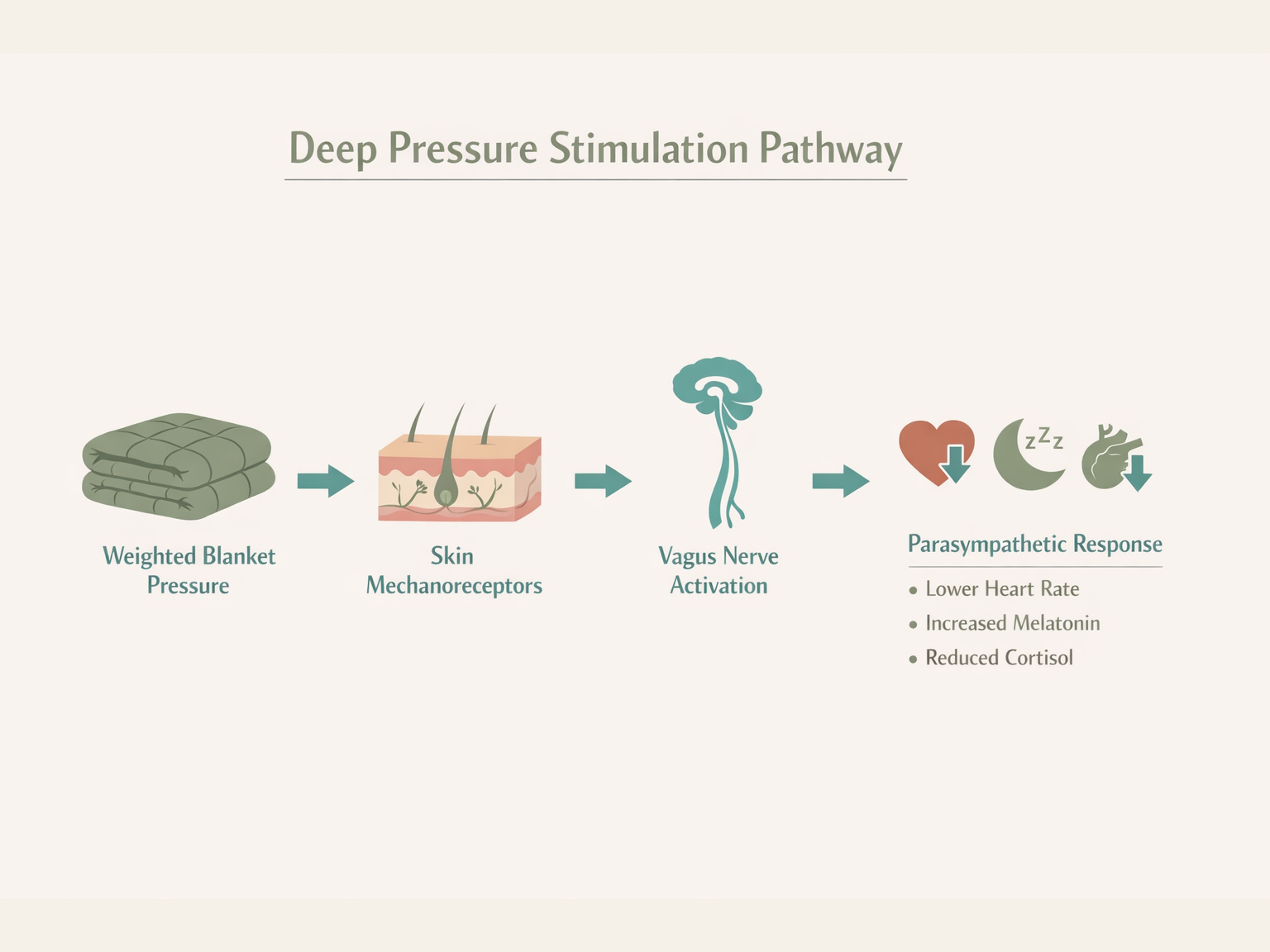
Weighted blankets work through a mechanism called deep pressure stimulation (DPS). The evenly distributed weight activates mechanoreceptors in your skin, which send signals through the vagus nerve to shift your autonomic nervous system from sympathetic ("fight or flight") toward parasympathetic ("rest and digest") dominance.
This is the same physiological pathway activated by firm hugs, massage therapy, and swaddling in infants. The result is measurable: reduced heart rate, lower cortisol levels, and increased production of serotonin and dopamine. If you've read about how chronic stress reshapes your brain, DPS essentially works in the opposite direction — nudging your nervous system toward calm.
The Melatonin Connection
One of the most compelling recent findings comes from a 2023 study in the Journal of Sleep Research (Meth et al.). Researchers found that sleeping under a weighted blanket increased pre-sleep salivary melatonin concentrations by approximately 32% compared to a light blanket in healthy young adults.
Participants using a weighted blanket showed a 32% greater increase in melatonin from baseline to lights-off compared to the control group — suggesting deep pressure stimulation may directly enhance the body's natural sleep-onset signaling.
This matters because melatonin is your body's primary sleep-onset signal. A 32% boost is significant — comparable to what low-dose melatonin supplements provide, but without exogenous supplementation. For context on how melatonin fits into your broader sleep architecture, that initial melatonin surge helps you transition into deeper slow-wave sleep more efficiently.
Insomnia and Anxiety: Clinical Trial Results
A landmark 2020 randomized controlled trial published in the Journal of Clinical Sleep Medicine (Ekholm et al.) studied 120 patients with psychiatric disorders and co-occurring insomnia. The results were striking:
- Participants using weighted blankets were 26 times more likely to experience a 50%+ reduction in insomnia severity
- Significant improvements in sleep maintenance and daytime alertness
- Reduced symptoms of fatigue, depression, and anxiety after just four weeks
A 2024 systematic review and meta-analysis in the Journal of Psychiatric Research confirmed these trends across multiple studies, finding consistent improvements in sleep quality and anxiety symptoms in both inpatient and outpatient psychiatric settings.
The evidence is strong, though researchers note that sample sizes remain small and more large-scale RCTs are needed. For most healthy adults experiencing garden-variety insomnia or situational anxiety, the risk-benefit ratio strongly favors trying a weighted blanket.
How Do You Choose the Right Weighted Blanket?
The clinical benefits depend on getting the right blanket for your body and sleep preferences. Here's what actually matters.
Weight — The 10% Rule and When to Break It
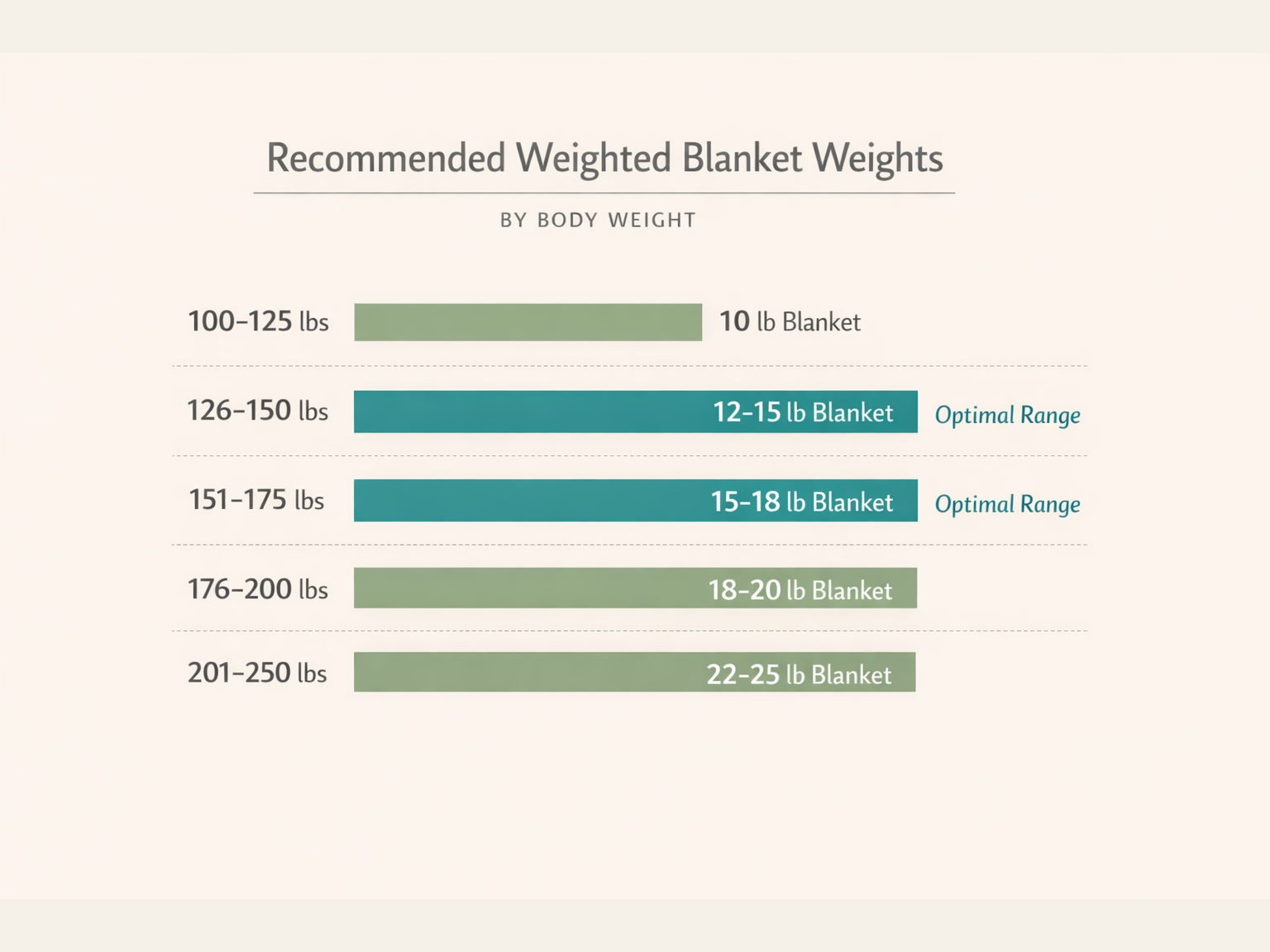
The standard guideline is to choose a blanket that's roughly 10% of your body weight. For a 150 lb person, that means a 15 lb blanket. This provides enough pressure to activate deep pressure stimulation without feeling restrictive.
When to adjust:
- Go lighter (7-8%): If you're new to weighted blankets, prone to claustrophobia, or a restless sleeper who changes positions frequently
- Go heavier (12-15%): Some users with ADHD or sensory processing differences report preferring heavier blankets — experiment gradually
- Between sizes: If you fall between two weight options, round down — a slightly lighter blanket is always more comfortable than one that feels oppressive
Fill Type: Glass Beads vs Steel Shot vs Knitted
The fill determines how weight is distributed, how the blanket drapes, and how noisy it is:
- Glass microbeads: The current standard. Small, dense, and nearly silent. Distribute weight evenly and allow the blanket to contour to your body. Found in most premium blankets.
- Steel shot beads: Heavier per bead, so the blanket can be thinner. Slightly noisier when shifting positions. Less common now.
- Knitted (no fill): Brands like Bearaby use densely knitted organic cotton to achieve weight without any fill material. More breathable, machine-washable, and the weight feels more evenly integrated. The trade-off is a higher price point and less precise weight options.
- Plastic poly pellets: Budget option. Larger, lighter pellets that can feel lumpy and shift unevenly. Avoid these — they compromise the even pressure distribution that makes weighted blankets effective.
Fabric and Breathability
If you tend to sleep hot, fabric choice matters as much as fill type. Look for:
- Cotton: Naturally breathable, good moisture-wicking, easy to wash
- Bamboo-derived fabrics: Excellent temperature regulation and moisture management
- Tencel/lyocell: Cool to the touch, smooth, highly breathable
- Avoid: Polyester mink/minky covers as your primary sleep surface — they trap heat and moisture
Many blankets come with removable duvet covers, which lets you swap between a cooling cover in summer and a warmer one in winter.
Size: Body-Sized vs Bed-Sized
Weighted blankets should drape over your body, not your bed. A blanket that hangs over the edges of your mattress will slide off during the night. Choose based on your body dimensions, not your mattress size. Most single-user weighted blankets are approximately 48" × 72" (twin-sized), which works for most adults on any bed size.
If you share a bed, get two individual weighted blankets rather than one oversized one — the weight needs to be concentrated on each person's body to deliver the DPS effect.
Which Are the Best Weighted Blankets for Sleep and Anxiety?
Based on the clinical evidence for what makes weighted blankets effective — even weight distribution, breathable materials, and appropriate pressure — here are our top picks. No separate anxiety pick this update: the cotton blanket we previously listed no longer surfaces reliably on Amazon, and the YnM below covers the same 5–30 lb range for precise weight selection, which is what matters most for the pressure-based anxiety effect.
| Pick | Weight options | Fill | Fabric | Best for |
|---|---|---|---|---|
| Luxome Cooling Weighted Blanket | 15, 18, 25 lb | Glass microbeads | Removable bamboo-lyocell cover, machine-washable | Best overall — cooling plus even pressure |
| Bearaby Cotton Napper | 10, 15, 20, 25 lb | None — knitted weight | GOTS-certified organic cotton | Hot sleepers, sustainability-conscious buyers |
| YnM Weighted Blanket | 5–30 lb | Glass microbeads | Cotton-poly blend (covers sold separately) | Best budget — first-time buyers |
Best Overall: Luxome Cooling Weighted Blanket
The Luxome combines glass microbeads with a removable bamboo-lyocell duvet cover that genuinely stays cool through the night. Weight distribution is exceptionally even thanks to small quilted pockets, and the cover is machine-washable. Available in 15, 18, and 25 lb options.
- Weight options: 15, 18, 25 lbs
- Fill: Glass microbeads
- Cover: Bamboo-lyocell (removable, washable)
- Best for: Most sleepers, especially those who want cooling + effective DPS
Best for Hot Sleepers: Bearaby Cotton Napper
Bearaby's approach is fundamentally different — no fill material at all. The weight comes entirely from layers of densely woven organic cotton, creating a chunky knit blanket with natural airflow between the weave. This makes it the most breathable weighted blanket available and the easiest to wash (it's fully machine-washable). If you've read our sleep environment guide, you know temperature control is critical for deep sleep — the Bearaby excels here.
- Weight options: 10, 15, 20, 25 lbs
- Fill: None (knitted weight)
- Material: GOTS-certified organic cotton
- Best for: Hot sleepers, sustainability-conscious buyers
Best Budget: YnM Weighted Blanket
YnM has iterated significantly since its early versions and now delivers surprisingly good quality at a budget price. The glass bead fill distributes weight well through small quilted compartments, and the cotton-polyester blend cover is durable. It's not as breathable as the premium picks, but for the price, it's the best way to test whether a weighted blanket works for you before committing to a higher-end option.
- Weight options: 5–30 lbs (widest range available)
- Fill: Glass microbeads
- Cover: Cotton-polyester blend (removable covers sold separately)
- Best for: First-time buyers, budget-conscious shoppers
How we chose these picks: selections are based on published specifications — how each blanket is weighted (glass beads in quilted pockets, or a dense knit with no fill), how evenly that weight is distributed, and how the fabric handles heat. We do not physically test them, accept free products, or publish star ratings we cannot verify. Affiliate commission never determines what is recommended. Read our full methodology.
- Glass microbeads in small quilted pockets for exceptionally even weight distribution
- Removable bamboo-lyocell cover that genuinely stays cool through the night
- Machine-washable cover; available in 15, 18, and 25 lb
As an Amazon Associate, we earn from qualifying purchases.
- No fill at all — weight comes from densely woven GOTS-certified organic cotton
- Chunky knit allows natural airflow; the most breathable weighted blanket available
- Fully machine-washable; 10, 15, 20, and 25 lb options
As an Amazon Associate, we earn from qualifying purchases.
- Surprisingly good quality at a budget price — the cheapest way to test if weighted blankets work for you
- Glass bead fill distributes weight well through small quilted compartments
- 5–30 lb range; durable cotton-poly cover (removable covers sold separately)
- Less breathable than the premium picks
As an Amazon Associate, we earn from qualifying purchases.
What Are the Best Cooling Weighted Blankets?
Heat retention is the number one complaint with weighted blankets — and for good reason. The extra layers and fill material trap body heat far more than a standard comforter. If you already sleep warm, this can undermine the very sleep benefits you're chasing.
Why Standard Weighted Blankets Trap Heat
Most bead-filled weighted blankets use tightly quilted pockets to prevent shifting. While this ensures even weight distribution, it also reduces airflow. Add a polyester cover and you have a recipe for night sweats — which fragments sleep and defeats the purpose.
Cooling Features That Actually Matter
Not all "cooling" claims are equal. Based on what actually impacts sleep temperature:
- Knitted construction (most effective): Open-weave designs like Bearaby allow air to circulate continuously — no trapped heat pockets
- Bamboo or Tencel covers: These fabrics wick moisture 3-4x better than cotton and feel cool to the touch
- Glass microbeads over poly pellets: Glass beads are denser, so the blanket can be thinner (less insulation) for the same weight
- Removable covers: Lets you swap to a lighter cover in summer months
Our top cooling picks: the Bearaby Cotton Napper (knitted cotton, no fill, maximum breathability) and Luxome Cooling (bamboo-lyocell cover with glass beads). Bearaby also makes a Tencel version, the Tree Napper, but it no longer turns up on Amazon, so it is not one of our picks. Both perform well in warm bedroom environments — ideally paired with the 65-68°F room temperature that research supports for optimal sleep architecture.
Do Weighted Blankets Help with Anxiety?
The clinical research on weighted blankets and anxiety is promising, though it's important to set realistic expectations. Weighted blankets are a complementary tool — not a standalone treatment for clinical anxiety disorders.
Daytime vs Nighttime Use
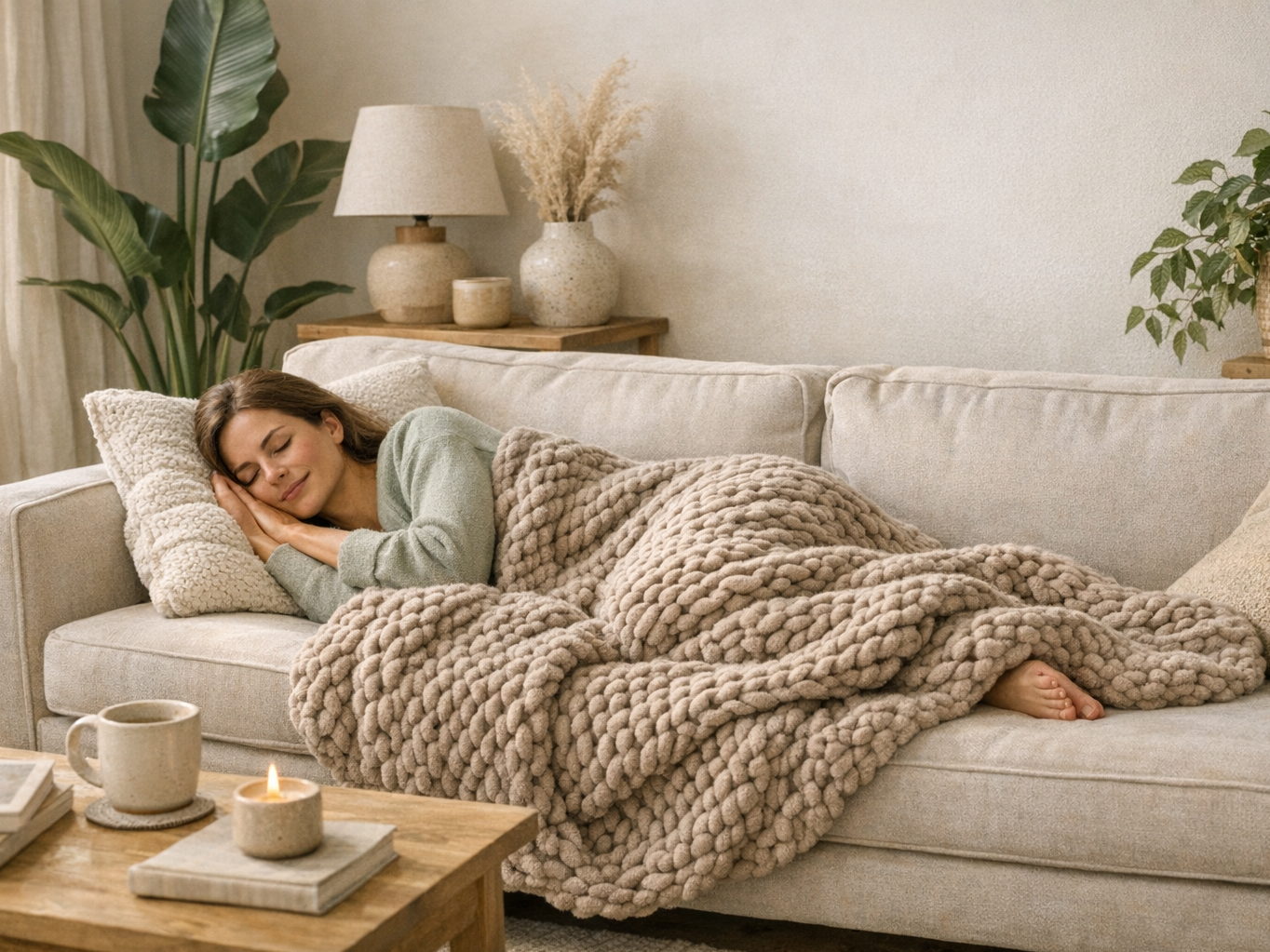
While most people associate weighted blankets with sleep, research participants in anxiety studies used them during waking hours too. A weighted blanket draped over your lap while working or watching TV can provide the same parasympathetic activation. Some users report the most noticeable anxiety reduction during daytime use, when the calming effect contrasts more sharply with baseline arousal levels.
For nighttime use, the anxiety benefit is harder to separate from the sleep improvement — better sleep naturally reduces next-day anxiety. Either way, the mechanism is the same: deep pressure stimulation downregulates your stress response.
Combining with Other Evidence-Based Strategies
A weighted blanket works best as part of a broader toolkit. Consider pairing with:
- A meditation practice — even 10 minutes of mindfulness meditation compounds the parasympathetic benefits
- Magnesium supplementation — magnesium glycinate supports both sleep quality and nervous system regulation
- Consistent sleep-wake timing — the most powerful single factor in sleep quality
- Reducing evening screen brightness — protects the melatonin production that weighted blankets enhance
Who Should Not Use a Weighted Blanket?
Conditions That Benefit Most
Research and clinical experience suggest the strongest benefits for:
- Insomnia: The strongest clinical evidence exists here, with 26x better outcomes in the Ekholm trial
- Generalized anxiety: Consistent improvements across multiple studies
- ADHD: Deep pressure may improve focus and reduce hyperarousal at bedtime
- Sensory processing differences: Occupational therapists have used weighted blankets therapeutically for decades
- Restless legs syndrome: Anecdotal evidence is strong, though controlled studies are limited
Safety Considerations and Contraindications
Weighted blankets are generally very safe for healthy adults, but avoid them if you:
- Have a respiratory condition (COPD, severe asthma) where chest pressure could impair breathing
- Have obstructive sleep apnea — the added weight may worsen airway obstruction (consult your sleep specialist)
- Are pregnant — chest and abdominal pressure should be discussed with your OB/GYN
- Experience claustrophobia — start with a lighter blanket and shorter sessions
For children: Weighted blankets should not be used on infants or toddlers under 2 years old. For older children, consult a pediatrician and use blankets specifically designed for their weight range.
How Do You Get the Most from a Weighted Blanket?
Break-In Period and Adjustment Tips
Most people need 3–7 nights to fully adjust to sleeping under a weighted blanket. During this period:
- Start with evening couch use before transitioning to all-night sleep
- Use it on top of a light sheet rather than directly on skin if the weight feels intense initially
- Give it a full week before deciding whether it works for you — the Ekholm study measured outcomes at four weeks
- If it feels too heavy after a week, exchange for a lighter option rather than abandoning the concept
Care and Washing Guidelines
Proper care extends the life of your weighted blanket significantly:
- Removable cover blankets: Wash the cover weekly, the inner blanket monthly. Most covers are machine-washable on gentle/cold.
- Knitted blankets (Bearaby): Machine wash on gentle, tumble dry low. Their single-piece construction actually makes them easier to maintain.
- Bead-filled blankets without covers: Check the weight limit on your washing machine. Blankets over 15 lbs may need a commercial washer. Always wash cold, gentle cycle.
- Never dry-clean a weighted blanket — the chemical solvents can break down fill materials and coatings.
Combined with the right bedroom environment — cool temperature, dark room, consistent schedule — a properly chosen weighted blanket can be one of the most effective and drug-free tools for improving your sleep. The research backs it up, and for most people, the adjustment period is short and the benefits compound over time.
Weighted Blanket FAQ
How heavy should a weighted blanket be?
The common guideline is roughly 10% of body weight, which puts most adults between 12 and 20 pounds. The guideline is a starting point rather than a rule — if the blanket feels restrictive or makes it hard to reposition during the night, size down. Comfort matters more than hitting an exact percentage.
Can you use a weighted blanket every night?
Yes. There is no evidence of tolerance or dependence, and nightly use is how most trials administered them. The practical limits are heat and mobility rather than safety.
Are weighted blankets safe for children?
Not for infants or toddlers. A weighted blanket is a suffocation and entrapment risk for a child who cannot easily lift it off, and it should never be used in a crib. For older children, use a much lighter blanket, confirm they can remove it unaided, and check with a paediatrician first — particularly if there is any respiratory or developmental condition.
Do weighted blankets make you too hot?
Many do, because the filling and the extra fabric layers trap heat. If you already sleep hot, look for glass-bead filling rather than plastic pellets and a breathable cotton or bamboo-derived cover, and consider a lighter weight than the 10% guideline suggests.
Who should not use a weighted blanket?
Anyone with obstructive sleep apnoea, chronic respiratory disease, circulatory problems, or limited mobility should check with a clinician first, since the added pressure can make breathing or repositioning harder. The same applies to anyone who cannot remove the blanket independently.
References
The melatonin finding described in this guide comes from the crossover trial it references:
- A weighted blanket increases pre-sleep salivary concentrations of melatonin in young, healthy adults — Journal of Sleep Research, 2023 (PubMed)

Founder & Editor
Xiujun Ma is the founder and editor of Home Wellness Science, where he researches and edits evidence-based guides on sleep, nutrition, supplements, air and water quality, fitness, and the home environment. His focus is translating peer-reviewed research into practical, no-hype guidance.
Related Articles